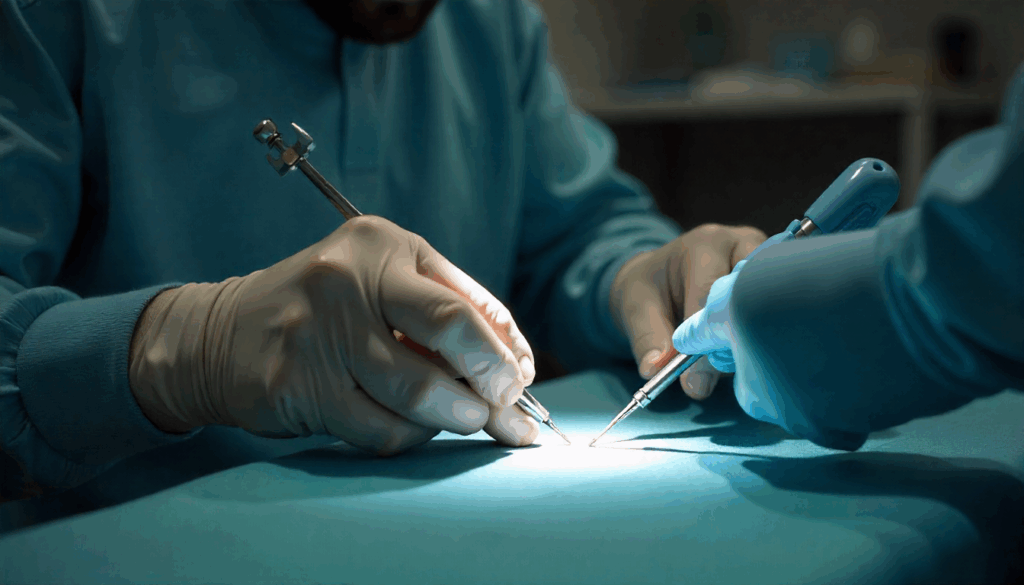
The dental elevator is a fundamental instrument in exodontia, acting as the precursor to forceps application. Its role in luxating teeth and severing the periodontal ligament is critical for a successful, minimally traumatic extraction. Selecting the right elevator and maintaining it properly are key skills for any dental surgeon.
Selecting the Right Elevator for the Task:
Straight Elevators:
The most common type. Ideal for mobilizing single-rooted teeth, root tips, and beginning the luxation of multi-rooted teeth. The size of the blade should match the periodontal space.
Coupland’s Elevators (A/W):
A type of straight elevator with a sharper, more tapered tip. Excellent for initial socket dilation and engaging root surfaces in a more controlled manner.
Cryer’s Elevators (Triangular):
Designed with a pointed, triangular tip. Their primary function is for removing fractured roots, particularly lower molars, by engaging the root from the interdental septum.
The Pillars of Proper Maintenance:
Immediate Cleaning:
After use, elevators should be cleaned of all biological debris to prevent pitting and corrosion.
Inspection:
Regularly inspect the tip under magnification. A dull or damaged tip increases the force required and the risk of fracture or slippage.
Sharpening:
While they do not hold a “cutting edge” like a scalpel, a properly maintained tip is essential. Honing with a fine sharpening stone can restore the necessary keenness for precise engagement.
Mastery of dental elevators is a blend of art and science. Understanding the specific design and function of each type, combined with a rigorous maintenance protocol, ensures optimal performance, enhances patient safety, and prolongs the life of your valuable instruments. Explore our range of precision-crafted dental elevators to equip your practice for any exodontia challenge.